Quarry to port · blocks and slabs
Granite in Transit: Blocks, Slabs and the Weight Problem
Granite fails differently from marble. It is harder and less prone to chipping, and much heavier, so the losses come from the load itself: shifting blocks, overturned trailers, damaged beds and cranes. The cover has to follow the weight, and the export leg has to be joined to the inland one without a gap.
Key takeaways
- Granite losses skew towards total or major partial rather than cosmetic. Overturning and collision, both ITC-B perils, matter more here than on processed stone.
- Blocks shift. Lashing and chocking is the difference between a delivered load and an overturned one, and inadequate securing invites the packing exclusion.
- Loading and unloading by crane is a distinct exposure, and whether it sits inside the transit policy depends on the attachment wording.
- On export movements the inland leg and the sea leg are governed by different clause sets, and the join between them is where cover is lost.
- For a high-value block consignment, ITC-A removes arguments that ITC-B invites.
Watch: quarry to site, in 60 seconds
Easy English with Hindi · खदान से साइट तक: जहाँ बीमा साथ छोड़ देता है
A 60-second film in easy English and Hindi on where marble and granite insurance stops, from the quarry face to the port: machines and contract labour at the quarry, gang saws in the factory, loading, the 7 events a basic transit policy pays for on the road, CIF at the port, and what to do if a slab arrives broken. Shot on real quarries, factories, trucks and ports. Watch it on its own page.
Read the film: every line, in English and Hindi
| 0:00 | Marble and granite. Quarry to site: where your insurance stops. 5 places stone gets damaged, and what to check at each.मार्बल और ग्रेनाइट। खदान से साइट तक: जहाँ बीमा साथ छोड़ देता है। 5 जगहें जहाँ पत्थर का नुकसान होता है, और हर जगह क्या जाँचना है। |
| 0:05 | The journey of a block, from the pit to the port: quarry, factory, loading, road, port.एक ब्लॉक का सफ़र, खदान से बंदरगाह तक: खदान, फ़ैक्टरी, लदान, सड़क, बंदरगाह। |
| 0:10 | 1. Quarry: machines and people. Machines in the pit need plant and machinery cover. Worker hurt: the owner is liable, even with no fault. Contract labour too, under section 81.1. खदान: मशीनें और लोग। खदान की मशीनों के लिए प्लांट एंड मशीनरी कवर। मज़दूर घायल: गलती न हो तब भी ज़िम्मेदारी मालिक की। ठेके के मज़दूर भी, धारा 81 के तहत। |
| 0:17 | 2. Factory: gang saws and polishing lines. Fire policy covers the premises. Machine breaks down: machinery breakdown cover. Lost business: not in a normal fire policy.2. फ़ैक्टरी: गैंग-सॉ और पॉलिशिंग लाइन। फायर पॉलिसी परिसर को कवर करती है। मशीन ख़राब: मशीनरी ब्रेकडाउन कवर। कारोबार का नुकसान: आम फायर पॉलिसी में नहीं। |
| 0:25 | 3. Loading: where most stone breaks. Poor packing by you: never covered. Take photos before the tirpal goes on. Crane loading: check when cover starts.3. लदान: जहाँ सबसे ज़्यादा पत्थर टूटता है। आपकी कमज़ोर पैकिंग: कभी कवर नहीं। तिरपाल डालने से पहले फ़ोटो लीजिए। क्रेन से लदान: देखिए कवर कब शुरू होता है। |
| 0:32 | 4. On the road: the basic policy pays for 7 events only. Overturning and collision: covered. Chipping and handling damage: not covered. Theft and short delivery: not covered. Poor packing by you: not covered. Rain is not one of them either. Check what your own policy says before the load leaves.4. सड़क पर: बेसिक पॉलिसी सिर्फ़ 7 घटनाओं का पैसा देती है। पलटी और टक्कर: कवर। टूट-फूट और लदान का नुकसान: कवर नहीं। चोरी और माल कम पहुँचना: कवर नहीं। आपकी कमज़ोर पैकिंग: कवर नहीं। बारिश भी इनमें नहीं। माल निकलने से पहले देखिए आपकी पॉलिसी क्या कहती है। |
| 0:40 | 5. Export: CIF gives the smallest sea cover. It pays only for major accidents such as fire, sinking or collision. Theft and most water damage are left out. The sales contract sets the sea cover. Check it.5. निर्यात: CIF में सबसे सीमित समुद्री कवर। यह सिर्फ़ आग, डूबने या टक्कर जैसे बड़े हादसों का पैसा देता है। चोरी और ज़्यादातर पानी का नुकसान बाहर। समुद्री कवर बिक्री अनुबंध तय करता है। जाँचिए। |
| 0:45 | Slab arrived broken? Do these 4 things. Take photos before moving anything. Get the damage written on the challan, signed by the driver. Keep the packing for the surveyor. Written notice to the transporter within 180 days of booking.स्लैब टूटकर पहुँचा? ये 4 काम कीजिए। कुछ भी हटाने से पहले फ़ोटो लीजिए। चालान पर नुकसान लिखवाइए, ड्राइवर के हस्ताक्षर के साथ। सर्वेयर के लिए पैकिंग वैसी ही रखिए। बुकिंग से 180 दिन में ट्रांसपोर्टर को लिखित नोटिस। |
| 0:52 | Free policy check. Send your policy on WhatsApp, 92514 56334. We tell you where your cover stops. Rakshit Financial Services, Udaipur, since 2004.मुफ़्त पॉलिसी जाँच। अपनी पॉलिसी व्हाट्सऐप कीजिए, 92514 56334, और जानिए बीमा कहाँ साथ छोड़ता है। रक्षित फाइनेंशियल सर्विसेज़, उदयपुर, 2004 से। |
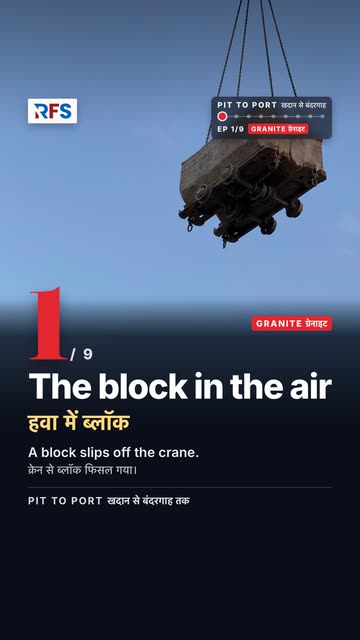
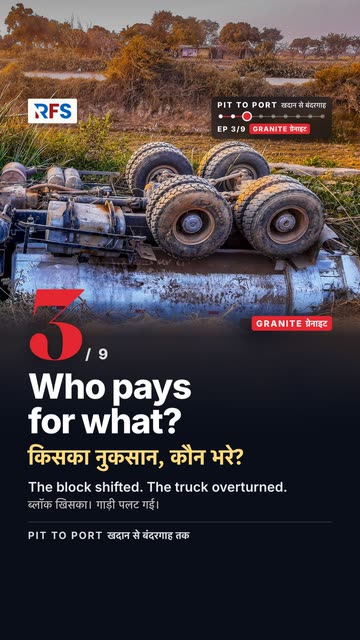
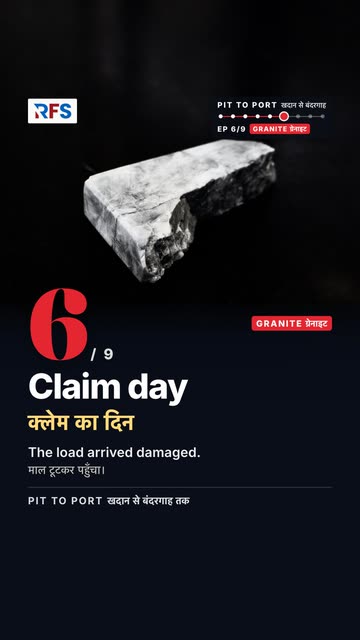
Watch: 3 short videos on this topic
From Pit to Port, a video series in easy English and Hindi on marble, granite and marine cover. Under 30 seconds each.
What actually goes wrong, and whether it is covered
Read this against your own policy schedule. The clause set named there decides which rows below you are insured for.
| Exposure | What it means in practice |
|---|---|
| Load shift and overturning | The dominant granite loss. A block that moves on the bed takes the trailer with it. Covered under ITC-B, and the reason overturning is worth reading carefully in your wording. |
| Crane and handling damage at loading | Blocks are lifted, not carried. Damage during lifting may fall outside the transit policy depending on when cover attaches. |
| Bed and axle failure under weight | Mechanical failure of the carrying vehicle is not itself an insured peril. The consequences of an accident are; the breakdown is not. |
| Edge and corner damage on slabs | Where granite is moved as processed slabs, it behaves like marble and the same handling-breakage gap applies. |
| Port and stevedoring damage | On the export leg, damage in handling at the port is a different clause set and often a different insurer's problem. |
If it happens: the first four things
In order. The first two are the ones people get wrong, and they are the ones that cannot be fixed afterwards.
- Photograph the lashing and chocking before departure. On a shifted-load claim the insurer's first question is how the block was secured.
- Record the weight and the vehicle's rated capacity. An overloaded vehicle invites an argument about roadworthiness that can defeat an otherwise good claim.
- At delivery, get the damage endorsed on the challan before the block is offloaded, not after.
- Leave the load as it lies where it is safe. A block moved before survey is a block whose damage cannot be attributed.
Written notice to the transporter must go within 180 days of the booking date under section 16 of the Carriage by Road Act, 2007. Not from the date of loss, and a claim bill does not count as notice. The wording is ready to copy at our claim letters page.
The words the trade actually uses
Useful when the loss is being described by a driver, a munshi or a godown supervisor rather than by you.
| Hindi | What it means for the policy |
|---|---|
| ब्लॉक | quarry block |
| लदान / लोडिंग | loading, where much of the damage happens |
| रस्सी-बंधन | lashing, the thing the surveyor asks about |
| पलटी | overturning, covered under ITC-B |
| बिल्टी | consignment note |
Export and the sea leg
Granite is an export commodity and the two legs are governed separately. Inside India it is Inland Transit Clauses; on the water it is Institute Cargo Clauses. Under CIF the seller must insure but only to ICC (C), the narrowest set, which is a named-perils cover that leaves theft and most wetting outside. Buyers routinely assume they hold all-risks cover and discover otherwise after a loss.
The clause sets themselves are set out in full on our marine cargo clauses page, including the seven named perils under ITC-B taken from an insurer's filed wording.
Frequently asked questions
What insurance covers granite blocks in transit?
Inland Transit Clauses for the movement inside India, and Institute Cargo Clauses for the sea leg if the blocks are exported. For high-value block consignments ITC-A avoids the arguments that a named-peril cover invites, and the premium difference on a single overturned trailer is not worth the saving.
Is overturning covered under transit insurance?
Yes. Overturning of the carrying vehicle or wagon is one of the seven named perils under Inland Transit Clauses (B), so it is covered even on the narrower policy. It is the peril that actually pays on heavy stone.
Who is responsible if a granite block shifts and damages the truck?
That is a liability question rather than a cargo one. The transit policy covers your goods; damage to the vehicle and to third parties sits with the transporter's own cover. Where you arranged the loading, expect the question of whether it was properly secured to be raised against you.
Does the policy cover damage during crane loading?
Depends on the attachment wording. Cover that attaches when the goods leave the named premises may not respond to damage while the block is still being lifted. On block movements this is worth checking specifically rather than assuming.
What clause set applies to exported granite?
Institute Cargo Clauses on the marine leg, Inland Transit Clauses on the road leg to the port. Under CIF the seller is obliged to insure only to ICC (C), which is the narrowest set and excludes theft and most water damage. If the buyer expects all-risks cover, it has to be specified as ICC (A).
Related: Marine cargo clauses explained · Marble quarry insurance, Rajsamand · Marine cargo quote · Marble transit insurance · The letters to send after a loss.