Cargo and transit · India
Which Marine Clause Is Your Consignment Actually On?
Two different clause sets govern Indian cargo and they are constantly confused, including by pages that ought to know better. Inland Transit Clauses cover a truck or wagon inside India. Institute Cargo Clauses cover the sea or air leg of an export. Quoting one at the other describes a contract that does not apply to your goods.
Key takeaways
- Domestic road or rail is ITC, not ICC. A Kishangarh to Delhi truck movement is an Inland Transit risk. Institute Cargo Clauses belong to the marine leg of an export.
- ITC-B is a named-peril cover with seven perils. If the loss is not attributable to one of them, it is not covered, however genuine it is.
- Theft, pilferage and handling breakage are not in ITC-B. That is the most common surprise on stone, tile and glass movements.
- Packing done by you is excluded if it was insufficient. This decides a large share of breakage claims.
- The carrier notice runs 180 days from booking, not from the loss, under section 16 of the Carriage by Road Act, 2007.
The two families
Domestic, by road or rail
Inland Transit (Rail or Road) Clauses
| Clause | What it is |
|---|---|
| ITC-A | All risks, subject to exclusions. Theft, pilferage, non-delivery and accidental breakage come in here and nowhere below. |
| ITC-B | Named perils only. The seven listed below. |
| ITC-C | The narrowest. Fire and a short list of major accidents. |
Export or import, sea or air
Institute Cargo Clauses
| Clause | What it is |
|---|---|
| ICC (A) | All risks, subject to exclusions. The widest cover in the set. |
| ICC (B) | Named perils, wider than (C). Includes water damage, washing overboard and entry of sea, lake or river water. |
| ICC (C) | Major casualties only: fire, explosion, stranding, sinking, collision, general average sacrifice and jettison. No water damage, no theft. |
What ITC-B actually covers, in full
The seven named perils, as they appear in an insurer's filed product wording. Anything outside this list needs ITC-A or a specific extension.
| Peril | What it means on the road |
|---|---|
| Fire or explosion | The most common total loss on a truck, and it takes the whole load rather than part of it. |
| Lightning | Rare, and listed because it is a named peril: if it is not named, it is not covered. |
| Breakage of bridges | A monsoon peril in practice. The bridge fails, the consignment goes with it. |
| Earthquake and volcanic eruption | Present in the wording whether or not it feels relevant to a Rajasthan road movement. |
| Collision with or by the carrying vehicle or wagon | Your fault or theirs, the cover responds either way. |
| Overturning of the carrying vehicle or wagon | The palti. On stone and tiles this is the peril that actually pays. |
| Derailment or accidents of like nature to the wagon or vehicle | The rail equivalent, and the catch-all for accidents of that character. |
What is excluded, and what it costs people
Wilful misconduct, ordinary leakage and wear, insufficient packing carried out by you or your staff, and loss caused by delay even where the delay itself came from an insured peril.
The packing exclusion is the one that bites. On marble, tiles and glass the insurer will ask how the load was secured, and if the answer is that the transporter did it the way he always does, the claim gets difficult. Agreeing a packing and lashing standard in writing before the season is cheaper than arguing it after a loss.
Choosing between A and B
The honest test is what your realistic loss looks like. If the thing that keeps you awake is a truck overturning or a bridge going down, ITC-B answers it. If it is a slab arriving chipped, a drum going missing, or a consignment quietly not delivered, only ITC-A answers it, and the premium gap is usually smaller than the gap in cover.
ITC-C exists and is rarely the right answer. If someone has quoted it to you, ask what they think it excludes.
By commodity
The clause answer changes with what you are moving, because the realistic loss changes. These go into the detail for the four we handle most.
- Marble in Transit: The Cover Most Traders Have Is the Wrong One — Kishangarh · Rajasthan · stone in transit
- Granite in Transit: Blocks, Slabs and the Weight Problem — Quarry to port · blocks and slabs
- Textiles in Transit: Water Decides Most Claims — Bhilwara · Pali · yarn and fabric
- Chemicals in Transit: Two Policies, Not One — Bhiwadi · Alwar · hazardous goods
- Cement in Transit: Rain Is Not One of the Seven Perils — Chittorgarh · Nimbahera · Rajasthan · cement in transit
- Farm Produce in Transit: Weight, Water and the Two Exclusions — Rajasthan · mustard, guar, cumin · produce in transit
- Machinery in Transit: Paid by the Part, Not the Machine — Plants and projects · heavy and over-dimensional cargo
Watch: 4 short videos on this topic
From Pit to Port, a video series in easy English and Hindi on marble, granite and marine cover. Under 30 seconds each.
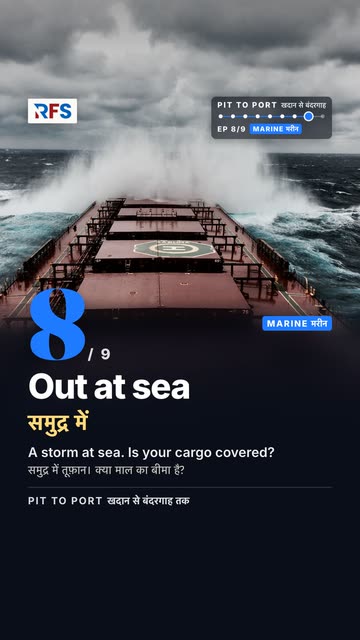 Ep 8 · MarineA storm at sea. Is your stone cargo covered?Video, 0:25
 Ep 4 · MarbleRain on the road, marks on your marble. Will the basic policy pay?Video, 0:21
 Ep 5 · MarbleSent 40 slabs, 38 arrived. Who pays for the missing 2?Video, 0:20
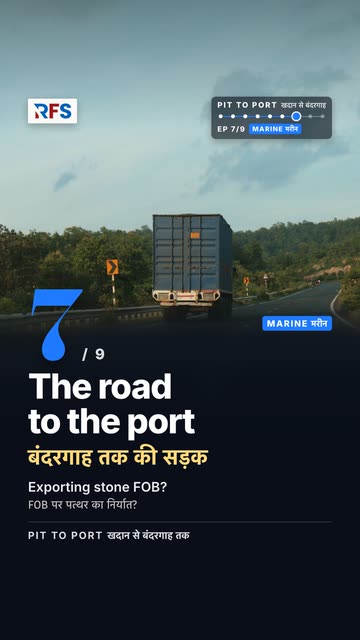 Ep 7 · MarineExporting stone FOB? The road to the port is your riskVideo, 0:22
Frequently asked questions
What is the difference between ITC and ICC?
They apply to different journeys. Inland Transit (Rail or Road) Clauses govern movements within India by road or rail. Institute Cargo Clauses govern the marine and air legs of an export or import. A domestic truck movement from Kishangarh to Delhi is an ITC risk, not an ICC one, and pages that quote ICC for it are describing the wrong contract.
What exactly does ITC-B cover?
Seven named perils: fire or explosion, lightning, breakage of bridges, earthquake and volcanic eruption, collision, overturning, and derailment or accidents of like nature. It is a named-peril cover, so the burden is on you to show the loss was reasonably attributable to one of them.
Does ITC-B cover theft or breakage?
No. Theft, pilferage, non-delivery and ordinary handling breakage are not in the seven. For those you need ITC-A, or ITC-B with the relevant extensions added. This is the single most common surprise at claim time on stone and tile movements.
Which one should I buy?
For fragile, high-value or easily stolen goods, ITC-A is usually the honest answer and the premium difference is smaller than people expect. ITC-B is defensible for robust cargo where the realistic loss is an accident rather than a theft. ITC-C is rarely the right answer for anyone.
Is packing covered?
Insufficient or unsuitable packing is excluded when it was done by you or your staff. That exclusion decides a large share of stone and glass claims, and it is why the packing standard is worth agreeing with the transporter in writing before the season starts.
What about delay?
Loss caused by delay is excluded even when the delay itself was caused by an insured peril. A bridge collapse that strands your consignment is covered for the physical damage, not for the market having moved by the time it arrives.
Does the policy cover the whole journey?
It depends on the clause attachment and the Incoterm. Under FOB and CFR the risk passes to the buyer once the goods are on board, which leaves the seller carrying the inland leg to the port, frequently uninsured. Getting that boundary right is half of what we do for exporters.
If the transporter is at fault, why do I need insurance?
Because a common carrier's liability is capped, and recovering it takes time you will not have. You must also serve written notice within 180 days of the booking date under section 16 of the Carriage by Road Act, 2007, and a claim bill does not count as that notice. Insurance pays; recovery from the carrier is the insurer's problem afterwards.
If the consignment is already damaged, the clause matters less than the next few hours: what to do in the first 72 hours of a cargo loss, and who has to be told first.